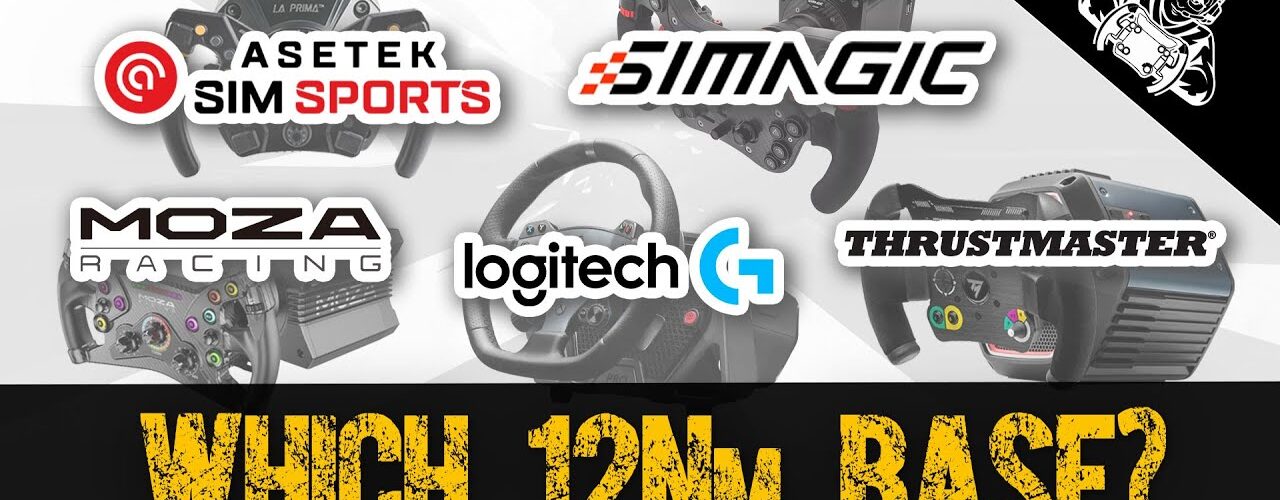
The 10-12Nm direct drive market has become one of the most competitive parts of sim racing. I compared five major options side by side: the Asetek La Prima, Simagic Alpha Mini, MOZA R12, Logitech G Pro and Thrustmaster T818.
Rather than simply declaring one of them the winner, I scored each across eight areas that mattered to me: price, build quality, wheel choice, ecosystem, quick release, software, form factor and force feedback. Those scores are deliberately subjective. The useful part of this comparison isn’t necessarily my final total; it’s being able to see why each base scored the way it did and change the weighting according to what matters to you.
There is also one important warning before looking at the advertised torque figures: more Newton metres on the box does not automatically mean better or stronger force feedback.
The five wheelbases
- Asetek La Prima – 12Nm
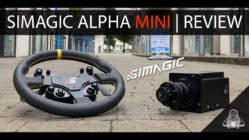
- Simagic Alpha Mini – 10Nm advertised
- MOZA R12 – 12Nm advertised
- Logitech G Pro – 11Nm and the only console-compatible option in this comparison
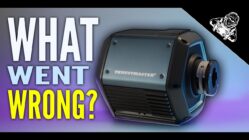
- Thrustmaster T818 – 10Nm
All prices and ecosystem observations below reflect the market when I made the comparison. Prices in particular can change substantially, so I wouldn’t use the historical figures as today’s buying prices.
Price
At the time, my comparable wheelbase-and-wheel configurations came to roughly €1,085 for the La Prima, €1,049 for the Alpha Mini, €918 for the R12 with KS wheel, €1,099 for the Logitech Pro and €810 for the T818 with the Open Wheel.
The MOZA R12 and KS combination was particularly difficult to beat for value. The Thrustmaster was cheaper again, although some of that saving became apparent elsewhere in the comparison. Logitech’s price was more competitive than people sometimes assumed, especially given that it was the only option here for console users.
Scores: La Prima 8/10; Alpha Mini 8/10; R12 9/10; Logitech Pro 8/10; T818 10/10.
Build quality
This category was remarkably close. Asetek, Simagic, MOZA and Logitech all scored 9/10 for me. The La Prima uses some less luxurious-feeling materials on its entry-level wheel, but the underlying construction and assembly quality are excellent. Simagic has also survived a huge amount of abuse in my hands without me needing hardware replacements, while the R12 felt rigid and consistently well put together.
The Thrustmaster T818 was the outlier. Some of its wheels and controls simply didn’t have the same premium feel, so it scored 7/10.
Scores: La Prima 9/10; Alpha Mini 9/10; R12 9/10; Logitech Pro 9/10; T818 7/10.
Steering wheel choice
Asetek didn’t have a huge first-party wheel range at the time, but its quick release changed the equation because of its USB passthrough. It meant I could attach a third-party USB wheel without having a cable wrapping around the steering column. That pushed the La Prima to 9/10 despite the small native range.
Simagic had an excellent selection but I felt it lacked a genuinely affordable wheel option, giving it 8/10. MOZA’s range was similarly strong, with products like the KS giving it a slight edge at 9/10. Logitech was the major disappointment here because there simply weren’t enough wheel-rim choices, resulting in 5/10. Thrustmaster had a broad and affordable selection, even if it lacked the premium end of the market, so it scored 8/10.
Scores: La Prima 9/10; Alpha Mini 8/10; R12 9/10; Logitech Pro 5/10; T818 8/10.
Ecosystem
On PC you don’t actually need to stay within one manufacturer’s ecosystem, but plenty of people want matching hardware, one supplier and as little software as possible.
Simagic was the strongest ecosystem in this particular comparison. It already offered multiple pedal sets, handbrakes and shifters alongside its wheelbases and steering wheels. I’ve spent a lot of time with products including the Simagic P2000 pedals, and at the time the breadth and quality of the range put Simagic at 9/10.
MOZA wasn’t far behind at 8/10, while Asetek’s relatively young ecosystem scored 7/10. Logitech had very little surrounding the Pro wheelbase and pedals and scored 6/10. Thrustmaster offered a much broader range of pedals, shifters and wheels, although generally at a more budget level, earning 7/10.
Scores: La Prima 7/10; Alpha Mini 9/10; R12 8/10; Logitech Pro 6/10; T818 7/10.
Quick release
Asetek won this category outright. Its one-handed quick release was already excellent, but the USB connection for third-party wheels made it much more useful than a mechanism that merely connects and disconnects a wheel. If I had to choose one of these quick releases to live with permanently, Asetek’s would be my choice.
The Simagic quick release has always been one of my favourites to physically use and scored 9/10, as did MOZA’s similar system. Logitech also surprised me with a rigid and effective design, again earning 9/10.
Thrustmaster’s system was a different story. I had issues with my unit, had to send it back and didn’t like the plastic-heavy adapter arrangement for older wheels. It simply wasn’t good enough beside this competition and scored 6/10.
Scores: La Prima 10/10; Alpha Mini 9/10; R12 9/10; Logitech Pro 9/10; T818 6/10.
Software
MOZA was my software winner. Firmware updates, configuration and navigation were all handled cleanly inside one application, while still offering enough adjustment for experienced users. It earned 10/10.
Asetek’s software was intuitive and straightforward and scored 9/10. One irritation was that saving wheelbase changes while driving could cause a substantial momentary freeze, so I wouldn’t recommend tuning it in the middle of a corner.
Simagic got a cautious 8/10. I’d had software problems around my Alpha U review, although the software was improving and I deliberately gave it some benefit of the doubt. Logitech’s software was comparatively basic but the defaults worked extremely well for me, so it still earned 9/10.
The T818 software experience felt cumbersome. Firmware and configuration lacked the polished standalone experience I expected, so I gave it 7/10.
Scores: La Prima 9/10; Alpha Mini 8/10; R12 10/10; Logitech Pro 9/10; T818 7/10.
Form factor and mounting
This is more important to me than it might be to some people because wheelbase size affects how close I can get my monitor and therefore my field of view.
The Simagic Alpha Mini was the clear winner. It is tiny for its performance level and can be front, bottom or side mounted, so it scored 10/10. The La Prima is larger but still well designed and scored 9/10. The R12 is relatively short, making it easy to fit in front of a display, but its mounting options were more limited, also resulting in 9/10.
The Logitech is enormous by comparison and the Thrustmaster also has a less convenient mounting/form-factor proposition. Both scored 6/10.
Scores: La Prima 9/10; Alpha Mini 10/10; R12 9/10; Logitech Pro 6/10; T818 6/10.
Force feedback: torque figures don’t tell the whole story
This was the category most likely to surprise people.
The La Prima was exceptional. I could get exactly the kind of detail and response I wanted and gave it 10/10. The Alpha Mini was extraordinarily close and also earned 10/10. Despite its 10Nm advertised figure, the Alpha Mini felt extremely strong in use and I regarded the La Prima and Alpha Mini as very difficult to separate on force-feedback quality.
The R12 was the shock. Although advertised at 12Nm, to me it simply didn’t feel as powerful as the La Prima or Alpha Mini. The detail was still excellent and it was significantly better than the R9, but my expectation at an advertised 12Nm was higher. I therefore scored its force feedback 8/10 rather than 10/10.
I did not personally experience thermal power fade during my R12 testing, including a roughly two-hour session. I mentioned it because some users had reported fitting fans to other MOZA hardware, but that was not something I personally reproduced in this test.
The Logitech was another surprise in the opposite direction. It felt extremely powerful and detailed with its supplied wheel and earned 10/10. Wheel weight and diameter can affect perceived force feedback, so the wheel being designed specifically for the base may have contributed, but the complete Logitech package felt excellent.
Finally, despite my criticisms elsewhere, the T818 itself produced genuinely good force feedback. With lighter wheels in particular it delivered plenty of detail and earned 9/10.
Scores: La Prima 10/10; Alpha Mini 10/10; R12 8/10; Logitech Pro 10/10; T818 9/10.
The final scores
| Wheelbase | Score |
|---|---|
| Asetek La Prima | 71/80 |
| Simagic Alpha Mini | 71/80 |
| MOZA R12 | 71/80 |
| Logitech G Pro | 62/80 |
| Thrustmaster T818 | 60/80 |
I hadn’t totalled the scores before recording the conclusion, so even I was surprised by the result: La Prima, Alpha Mini and R12 all finished on exactly 71/80.
That doesn’t mean they’re identical. Far from it. They arrived at the same number through different strengths and weaknesses.
So which 10-12Nm direct drive wheelbase should you buy?
If I personally had to choose between MOZA and Simagic at the time of this comparison, I leaned towards Simagic because the ecosystem felt more mature and I had enormous confidence in the hardware after years of use. The Alpha Mini’s tiny form factor was another major advantage.
But the R12’s value, excellent software and wheel selection made an extremely strong case. Asetek’s La Prima combined superb force feedback with my favourite quick release of the group and was clearly right at the same level.
The Logitech remained an excellent choice in its own right, and for console users it was effectively in a category of its own within this comparison. Its biggest weakness was the lack of ecosystem and steering-wheel choice rather than the actual driving experience.
The Thrustmaster T818 offered good force feedback at the lowest package price I compared, but its build quality, quick release, software and form factor prevented it from matching the top three as an overall package.
The bigger conclusion was how close the market had become. Once you’re buying at this level, diminishing returns become very real. Rather than blindly following my 71/80 tie, take the categories that actually matter to you, ignore the ones that don’t, and choose the wheelbase whose strengths line up with your own rig.
Disclosure: some of the products featured on my channel are supplied by manufacturers for review. My scores and conclusions are my own. Where affiliate links are provided on this site or alongside the original video, using them may earn me a commission without increasing the price you pay.


Add comment