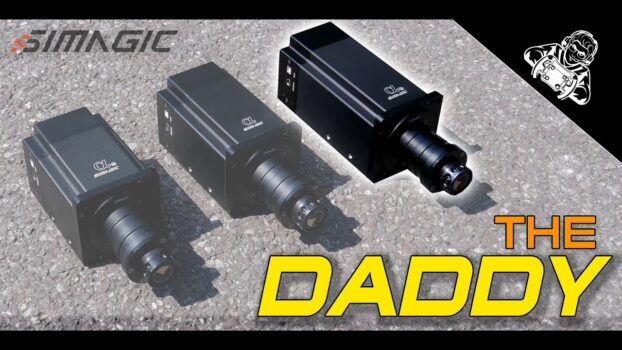
Quick verdict: The 23Nm Simagic Alpha U delivered exceptional force-feedback speed, strength and detail, backed by versatile mounting, an excellent cable-free quick release and a mature wheel ecosystem. Beta-era SimPro frustrations, coil whine and wireless issues with my older rims prevented it from feeling flawless, but it was still one of my favourite high-end wheelbases of the review period.
The Simagic Alpha U—also known as the Alpha Ultimate—was positioned against high-end direct-drive bases such as the Simucube 2 Pro, Asetek Invicta and VRS DirectForce Pro. This long-term review examines whether its 23Nm motor, ecosystem and lower bundle price could genuinely compete.
Product affiliate links & discounts
| Logo | Brands | Reseller | Discount Code | Link | Ships to | Locations |
|---|---|---|---|---|---|---|
 | Fanatec | Fanatec USA | https://laurencedusoswa.com/a/FANATEC-USA | America | Beverly Hills, California, USA | |
| Fanatec | Fanatec EU | https://laurencedusoswa.com/a/FANATEC-EU | EU | Landshut, Germany | |
| Fanatec | Fanatec Australia | https://laurencedusoswa.com/a/FANATEC-OZ | Australia | New South Wales, Australia | |
| Fanatec | Fanatec Japan | https://laurencedusoswa.com/a/FANATEC-JP | Japan | Tokyo, Japan | |
 | BDH, Conspit, Cube Controls, D-BOX, Heusinkveld, Logitech, MOZA, Pimax, Qubic System, Rexing, Simagic, Simucube, Trak Racer, VNM | Trak Racer USA | https://laurencedusoswa.com/a/TRAK-RACER-USA | America | Austin, Texas, USA | |
| BDH, Conspit, Cube Controls, D-BOX, Heusinkveld, Pimax, Qubic System, Rexing, Simagic, Simucube, Trak Racer, VNM | Trak Racer UK | https://laurencedusoswa.com/a/TRAK-RACER-UK | UK | Hertfordshire, England, UK | |
| BDH, Conspit, Cube Controls, D-BOX, Heusinkveld, MOZA, Pimax, Qubic System, Rexing, Simagic, Simucube, Trak Racer, VNM | Trak Racer EU | https://laurencedusoswa.com/a/TRAK-RACER-EU | EU | Venlo, The Netherlands | |
| BDH, BWT Alpine Formula One Team, Conspit, Cube Controls, D-BOX, Heusinkveld, Hot Wheels, Pimax, Qubic System, Rexing, Simagic, Simucube, Trak Racer, VNM | Trak Racer Australia | https://laurencedusoswa.com/a/TRAK-RACER-OZ | Australia | Victoria, Australia | |
 | Asetek | Asetek Global | 5% off with coupon code 'LD' | https://laurencedusoswa.com/a/ASETEK-GLOBAL | Global | Florida, USA. Aalborg, Denmark |
| Asetek | Asetek USA | 5% off with coupon code 'LD' | https://laurencedusoswa.com/a/ASETEK-USA | America | Florida, USA |
| Asetek | Asetek EU | 5% off with coupon code 'LD' | https://laurencedusoswa.com/a/ASETEK-EU | EU | Aalborg, Denmark |
 | Simagic | Simagic Direct | 3% off with coupon code 'LD' | https://laurencedusoswa.com/a/SIMAGIC | Global | Shenzhen, China, Asia |
 | Fanatec, GT Omega, HORI, Logitech G, MOZA Racing, Next Level Racing, Playseat, PXN, Thrustmaster, DIWANGUS | Amazon Global (will bring you to your local amazon store automatically) | https://laurencedusoswa.com/a/AMAZON | Global | ||
 | Apex Sim Racing, Cube Controls, D-BOX, Elgato, MOZA Racing, Pimax, Sabelt Sim Racing, Simagic, Simnet Racing, Simucube | Apex Sim Racing | 5% off with coupon code 'LD' | https://laurencedusoswa.com/a/APEX-SIM-RACING | Global | New Jersey, USA |
 | Advanced SimRacing, Ascher Racing, Base Performance Simulators, BavarianSimTec, BDH Race Sim Hardware, ButtKicker, Cube Controls, Daniel Newman Racing, D-BOX Technologies, Delta Sim-Tech, Gomez Sim Industries, Heusinkveld, IgnitiON Controls, Logitech, Max Papis Innovations, MME Motorsport, MOZA Racing, Novus Racing Simulators, P1Sim, Playseat, Precision Sim Engineering, Qubic System, Simucube, Sparco, Thrustmaster, Vero Motion, VNM Simulation, VPG Sim | Advanced Sim Racing | 5% off with code LDUSOSWAFIVE | https://laurencedusoswa.com/a/ASR | Global | Montreal, Canada |
 | Ascher Racing, ASUS, Base Performance Simulators, BDH Race Sim Hardware, ButtKicker, Cobra, Cube Controls, EPOS, Fanatec, Gigabyte, Go-Race, Gomez Sim Industries (GSI), Heusinkveld Engineering, ImSim, MME SimSport, MOZA, OBP, O-Rouge, Overclockers, Qubic System, Racelogic, Rexing, Sabelt Sim Racing, Samsung, Simucube, Simtag, Simtrecs, Sparco, Trak Racer, VPG Sim | Demon Tweeks | https://laurencedusoswa.com/a/DEMON-TWEEKS | Global | Wrexham, Wales, UK | |
 | bruzzi, ButtKicker, Conspit, Marina Racewear, MOZA Flight, MOZA Racing, Next Level Racing, Pro Simrig, Qubic System, Racing Sims, Sim Did, Simagic, Simetik, Simforge, Soelpec, Vero Motion | Abruzzi | https://laurencedusoswa.com/a/ABRUZZI | UK, EU | East-Sussex, England, UK | |
 | Streamlabs | Streamlabs | https://laurencedusoswa.com/a/STREAMLABS | Global | ||
| Restream | Restream | https://laurencedusoswa.com/a/RESTREAM | Global | |||
 | iRacing | iRacing | https://laurencedusoswa.com/a/IRACING | Global | Chelmsford, Massachusetts, USA | |
 | Coach Dave Delta | Coach Dave Academy | https://laurencedusoswa.com/a/CDA | Global | London, England, UK | |
 | Soelpec | Soelpec | https://laurencedusoswa.com/a/SOELPEC | Global | Istanbul, Turkey | |
 | Moza | Moza UK | https://laurencedusoswa.com/a/MOZA-UK | United Kingdom | UK | |
| Moza | Moza US | https://laurencedusoswa.com/a/MOZA-US | North & South America | USA | |
| Moza | Moza EU | https://laurencedusoswa.com/a/MOZA-EU | Global | Europe | |
| Moza | Moza Direct | https://laurencedusoswa.com/a/MOZA | Global | Shenzhen, China, Asia | |
 | Cobra, PRO SIMRIG, Qubic System, SIMAGIC, Sparco | RaceAnywhere | 5% off with coupon code 'LD' | https://laurencedusoswa.com/a/RACE-ANYWHERE | UK, EU | Northamptonshire, UK |
 | Grid Engineering, Sim-Lab, Sparco | Sim-Lab Direct | https://laurencedusoswa.com/a/SIM-LAB | Global | Tholen, The Netherlands, EU | |
 | Cammus | Cammus Direct | 5% off with code LDCAMMUS | https://laurencedusoswa.com/a/CAMMUS | Global | China, Asia |
 | Buttkicker | Buttkicker Direct | https://laurencedusoswa.com/a/BUTTKICKER | Global | Ohio, USA | |
 | Apex Sim Racing, Asetek SimSports, Gomez Sim Industries, Next Level Racing, SimSportGadget, Simtrecs, Simucube | SimRaceCity | 5% off with promocode: potato-nation | https://laurencedusoswa.com/a/SRC | USA | Fort Worth, Texas, USA |
 | Extreme Simracing, Simagic, D-BOX, DBOX | Extreme Simracing | https://laurencedusoswa.com/a/EXTREME-SIMRACING | America | Maringá, Paraná, Brazil | |
 | Ascher Racing, BavarianSimTec, SimRacingBay, Simucube | SimRacingBay | https://laurencedusoswa.com/a/SIMRACINGBAY | Global | Slovenia, EU | |
 | Simforge Engineering | Simforge Engineering | https://laurencedusoswa.com/a/SIMFORGE | Global | Chennai, India, ASIA | |
 | Website Hosting | HostGator | https://laurencedusoswa.com/a/HOST-GATOR | Global | USA | |
| RacGTing Racing Cockpits | RacGTing | https://laurencedusoswa.com/a/RACGTING | Global | Asia | ||
 | Getail Design | Getail Design | 5% off with coupon code 'LD' | https://laurencedusoswa.com/a/GETAIL | Global | Bergamo, Italy, EU |
 | Pimax | Pimax EU | https://laurencedusoswa.com/a/PIMAX-EU | EU | EU | |
| Pimax | Pimax | https://LaurenceDusoswa.com/a/PIMAX | Global | Shanghai , China | |
 | Asetek, Cube Controls, Fanatec, Sim Lab, Simagic | IRL Motorsports | https://laurencedusoswa.com/a/IRL-MOTORSPORTS | EU, UK | Dublin, Ireland | |
 | BDH | BDH Sim Hardware | https://laurencedusoswa.com/a/BDH | Global | Pocklington, York, UK | |
 | BDH, CAMMUS, Conspit, DOF Reality, Fanatec, Heusinkveld, MOZA Racing, PXN, Qubic System, Race Sim, Simnet Racing | RACESIM UK | 5% off with coupon code 'LD' | https://laurencedusoswa.com/a/RACESIMUK | UK, EU | London, UK |
 | Asetek SimSports, Conspit, Corbeau, Cube Controls, DOF Reality, Fanatec, Gomez Sim Industries (GSI), Heusinkveld, Leoxz, Moza, Sabelt, SIM HQ, Sim-Lab, Simagic, SRP, VRS | Simpatico Sim Shop | 5% off with coupon code 'POTATONATION' | https://laurencedusoswa.com/a/SIMPATICO | USA, Canada | Jacksonville FL, USA |
 | Conspit | iracesimulators | 10% off with code 'LD' | https://laurencedusoswa.com/a/IRACESIMULATORS | EU | Dublin, Ireland |
 | Bavarian Sim Tec | Bavarian Sim Tec | 5% off with coupon code LAURENCE-DUSOSWA | https://laurencedusoswa.com/a/BST | GLOBAL | Bavaria, Germany |
 | Advanced Sim Racing, Ascher Racing, D-Box Technologies, HandsOnPerformance, Heusinkveld, Moza, Novus, OMP, ProSimRig, Simagic, Sim Consultants, Simucube, Sparco, Vero Motion | Sim Consultants | 5% off Simagic with code 'LD' | https://laurencedusoswa.com/a/SIM-CONSULTANTS | EU, UK | Dublin, Ireland, EU |
 | Asetek SimSports, Conspit, Cooler Master, Cube Controls, Fanatec, Logitech, MOZA Racing, Next Level Racing, Nitro Concepts, noblechairs, Simucube, Thermaltake, Thrustmaster | Overclockers (UK & USA) | https://laurencedusoswa.com/A/OVERCLOCKERS | Global | UK, USA | |
 | Advanced Sim Racing, Ascher Racing, BDH, Conspit, Full Push, Moza, Next Level Racing, Novus, Thrustmaster, VPG Sim | Full Push | 5% off with code 'LD' | https://laurencedusoswa.com/A/FULLPUSH | Canada | Canada |
 | Simsonn | Simsonn | 8% off with code LAURENCEDUSOSWA | https://laurencedusoswa.com/A/SIMSONN | Global | Kington, Herefordshire, United Kingdom & China |
 | 3DRap, Another Way, Ascher Racing, Asetek SimSports, Bavarian SimTec, BDH Race Sim, Brook Raslution, ButtKicker, Circuit One, Conspit, Cooler Master, Cube Controls, D-BOX, Dayton Audio, Delta Sim-Tech, DOF Reality, Elgato, EPLAB, Esportsim, Fanatec, FatBlackCat, GSI, Heusinkveld, HORI, KGL Creation Lab, Leoxz, MME Motorsport, MOZA FlightSim, MOZA Racing, MPI, Next Level Racing, Nitro Concepts, Novus, OMP, O-Rouge, OPLite, P1Sim, Pimax, Playseat, Pro Flight Trainer, Prosimu, PXN, Qubic System, Res-Tech, Rexing, Sabelt, Sensit Haptics, SG Racing, Sim Factory, Sim-Lab, Sim Racing Studio, Simagic, Simforge, Simgrade, SimRep, SimRig, Simucube, Simufy, Simsonn, Simtrecs, SimXPro, Soelpec, Sparco, The Mech Cat, Thermaltake, Thrustmaster FlightSim, Thrustmaster SimRacing, Tillett, TORQ, TrackTime, Trak Racer, VERO Motion, VIRPIL Controls, Virtual Fly, VNM Simulation, VPG Sim, VRS, Wheel Stand Pro | Simufy | https://laurencedusoswa.com/A/SIMUFY | EU, Global | Granada, Spain, EU | |
 | AccuForce, Asetek, CAMMUS, Conspit, Elgato (Stream Deck), Fanatec, Gomez Sim Industries, Logitech, Moza, PXN, Simagic, Simucube, Thrustmaster, VNM, VRS, Virpil | Sim Sport Gadget | 5% off with coupon code 'LAURENCE' | https://laurencedusoswa.com/A/SIMSPORTGADGET | USA, Global | Newark, NJ, USA |
| Asetek Racing | Asetek Nordic | 5% off with coupon code 'LD' | https://laurencedusoswa.com/A/ASETEK-NORDIC | ||
 | UGREEN | UGREEN | https://laurencedusoswa.com/A/UGREEN | Global | EU | |
 | Honeycomb | Honeycomb | 10% discount with code LAURENCEDUSOSWA10 | https://laurencedusoswa.com/a/HONEYCOMB | Global | EU, USA |
Introduction
Jump to: First impressions · Price · Hardware installation · Software · Support and shipping · Quick release · Wheel options · Force feedback · Final thoughts
Review context: This review was originally published in April 2024. Prices, software status, firmware, products, reseller arrangements and availability described below reflect that period and may have changed. Simagic and Simwear.eu supplied the reviewed hardware free of charge but had no editorial control.
I had already spent significant time with the 10Nm Alpha Mini and 15Nm Alpha. The 23Nm Alpha U retained the same basic architecture but added the power needed to compete directly with the strongest premium wheelbases.
Simagic combined that motor with a global reseller network and cable-free power and data for compatible steering wheels. The conclusions below are entirely my own despite the hardware being supplied for review. The affiliate table above may support the site at no extra cost to you.
First impressions
Unboxing this product was somewhat familiar to me at this stage although the inclusion of an emergency stop is really nice. All of the Simagic Alpha family feature almost identical architecture. The only real difference is the size of the motor. This motor is a beast. At 23Nm, you would expect it to be large. It does have a smaller footprint than the Simucube 2 Pro.
Simagic offers a wire-free experience for their beautifully backlit wireless steering wheels which carries a lot of appeal for someone like me. Driving with it for the first time also felt strangely familiar. I did have to get used to needing a new software package. Where older wheelbases used the Alpha Manager software, SimPro is a new piece of software that’s supposed to address some of the issues of the previous iteration. I’ll explain how that went in a later section.
Price and value
At the time of the April 2024 review, the Alpha U cost €1,149—almost €100 less than the Simucube 2 Sport and roughly €300 less than the Simucube 2 Pro. A Simagic bundle with a steering wheel was around €1,600, compared with approximately €2,300 for a roughly comparable Simucube package using the least expensive wheel listed at the time. Check current regional prices and bundles before buying.
Hardware installation
One of the reasons I like the alpha form factor is the multiple mounting options. While front mounting is my personal favourite, you can also base mount and even side mount this wheelbase. For side mounting you will need some extra hardware. All resellers should have these brackets in stock. The base mounting pattern is the same as the Fanatec 4 bolt mounting pattern.
The power and USB cable plug in to one side of the base while the other side sees a CAN bus port and a socket for the emergency stop cable. The emergency stop is smaller than I expected and did look quite nice on my rig. It has bright green LEDs which may not be to everyone’s liking. While at first I was quite excited about having an emergency stop, I was disappointed to learn that it simply disconnects the USB connectivity and cannot function as a power on/off switch. As there’s no power switch on the base itself, I found myself not turning the wheelbase off which is a bit of an issue with Simagic products. You see, depending on your settings, Simagic’s motors suffer from something called ‘coil whine’ where the motor effectively vibrates at all times while power is connected. This vibration can be felt but not seen, but the big issue is that it’s REALLY noisy. Again, this depends on your settings but I have to unplug the power cable of the side of the wheelbase every time I finish racing. I really wish they’d solve this issue somehow. The noise could remain even when the PC was off, so I would have preferred a proper power switch on the base.
Software setup
The software observations here are specific to the beta version of SimPro used during this review. It provided accessible force-feedback sliders and could be adjusted while driving, but relying on beta software for essential wheelbase and steering-wheel functions was not ideal.
LED configuration was unnecessarily laborious. Redline values moved in coarse 10% increments, and custom sequences required individual adjustments at each step. Presets helped, but synchronising the LEDs accurately across different cars and simulators remained a manual process.
Automatic game-profile switching caused the greatest frustration. SimPro sometimes loaded a default profile despite my earlier selection, including during race sessions. Cloud-shared profiles were hinted at but unavailable in the beta version I tested. Current buyers should check the latest SimPro features because these limitations may have changed considerably since April 2024.
Wheelbase firmware could be updated through SimPro, while my steering wheels required a separate WheelUpdater tool and direct PC connection. My older GT1 and GT4 wheels also developed intermittent wireless problems after the move to SimPro. Those issues took months to diagnose and were eventually resolved, but they materially affected the review experience.
Shipping, support and returns
During the review period, Simagic’s reseller-led distribution model was a major strength. Local sellers generally handled support and returns directly, reducing the complications of dealing with an overseas manufacturer. My own review access gave me a direct route to Simagic, so buyers should also examine the reputation and terms of their chosen authorised reseller.
Owner communities on Discord and Facebook also provided useful troubleshooting knowledge. Hardware reliability was strong in my testing, while most of my difficulties centred on software and older wheel firmware.
Quick release
This was one of the most rewarding quick-release designs I had used. The ball-bearing mechanism originated with NRG rather than Simagic, but Simagic integrated power and data through the connection so compatible wheels required no USB cable. It locked solidly with no noticeable play. The exact 50mm and 70mm wheel-side options described in the original review may have changed, so verify current compatibility before combining older and newer hardware.
Steering-wheel options
The prices in this section reflect the April 2024 range. The original 330mm GT1 was €449 but felt dated, with weak rotary encoders and relatively few controls. The newer 300mm GTS was also €449 and offered a better all-purpose balance of weight and functionality, although its rim could not be replaced.
For custom rims, the GT Pro Wheel Hub was €479 alone or €449 with the C-shaped rim. I considered it a better foundation than the GT1 for many buyers. The compact 300mm GT4 remained an excellent VR-friendly option at €529, with two seven-way hats but no thumb rotaries.
The €579 FX added thumb rotaries but placed its single seven-way hat awkwardly near the centre. The FX Pro added a screen and extra rotaries; its included dashboards looked excellent, although simulator compatibility and customisation were more limited than SimHub.
Most Simagic wheels offered configurable RGB backlighting, while clutch-paddle availability varied. Across the range, the newer sticker sets were well made and easy to apply. Check the current product range, prices and paddle options because the ecosystem has evolved since this review.
Force-feedback performance
It’s incredible. It feels really good, I honestly wouldn’t be able to tell it apart from the Simucube 2 PRO in a blind test. It has everything you could want and more as far as I’m concerned, and I have a lot of direct-drive experience. The wheel speed, or slew rate, is so good that I usually actually turn it down. I feel everything I need to feel and get a great force feedback experience with this wheelbase.
A good force feedback experience is nothing new for Simagic. I have also done long-term reviews for the Alpha and Alpha mini. Each one has excellent detail and power, often feeling far more powerful than the advertised torque figures. Simagic has improved their firmware since early reviews came out and things like road feel and response times have improved drastically. The Alpha U is just on another level again. The speed and power just makes you want to stay in your rig that little bit longer. Be warned that it’s tempting to turn the forces way up but I don’t run this at more than 60% of its capability.
This is one of the best force feedback experiences I have ever had. However it must be said that at the higher end of direct drive, its difficult to find the minute differences between wheelbases once you go over 17Nm of available torque.
Final thoughts
During the review period, the Alpha U became my favourite wheelbase—not because its force feedback was dramatically better than the Asetek or Simucube alternatives, but because of its mounting flexibility, compact size, excellent quick release and broad cable-free wheel range.
The main weaknesses were equally clear. Beta-era SimPro profile switching was unreliable, the motor could produce distracting coil whine while powered, and my older GT1 and GT4 wheels suffered wireless problems until their firmware issues were resolved. Buyers considering used older wheels should confirm that their firmware can be updated successfully.
Simagic’s authorised-reseller model offered competitive pricing with local service and consumer protection, but buyers should confirm that a seller is officially supported. Simwear.eu supplied part of the hardware used for this review.
Overall, the Alpha U paired top-tier force feedback with one of the strongest ecosystems available at the time. The software prevented it from feeling perfect, but the driving experience, mounting options and quick release made it exceptionally compelling.



Add comment