
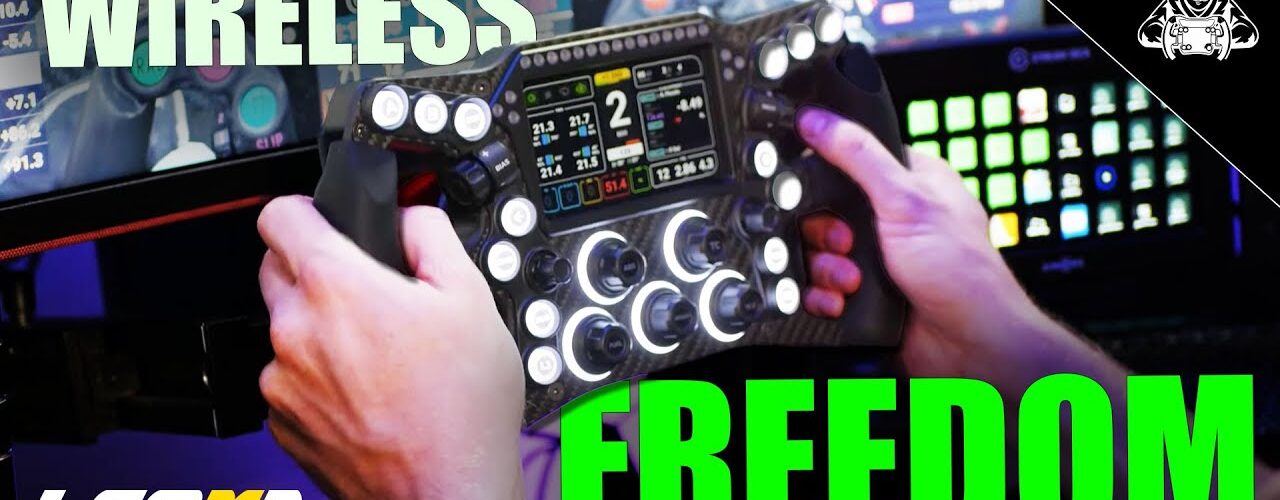
Only a couple of years ago, a carbon-fibre sim racing steering wheel with a screen and this level of functionality could easily have cost around €1,500. The LEOXZ XGT Ultimate turns that expectation on its head. Even the high-spec wireless configuration I tested came in below €800 at the time of my review, and after several weeks of use I kept coming back to the same question: how are they selling this for the money?
The answer isn’t that LEOXZ has somehow created a completely compromise-free flagship wheel. There are compromises, particularly around software, setup and the grips. But the actual hardware and functionality are extremely impressive, and the wireless system turned out to be far better than I expected.
| Logo | Brands | Reseller | Discount Code | Link | Ships to | Locations |
|---|---|---|---|---|---|---|
 | Fanatec | Fanatec USA | https://laurencedusoswa.com/a/FANATEC-USA | America | Beverly Hills, California, USA | |
| Fanatec | Fanatec EU | https://laurencedusoswa.com/a/FANATEC-EU | EU | Landshut, Germany | |
| Fanatec | Fanatec Australia | https://laurencedusoswa.com/a/FANATEC-OZ | Australia | New South Wales, Australia | |
| Fanatec | Fanatec Japan | https://laurencedusoswa.com/a/FANATEC-JP | Japan | Tokyo, Japan | |
 | BDH, Conspit, Cube Controls, D-BOX, Heusinkveld, Logitech, MOZA, Pimax, Qubic System, Rexing, Simagic, Simucube, Trak Racer, VNM | Trak Racer USA | https://laurencedusoswa.com/a/TRAK-RACER-USA | America | Austin, Texas, USA | |
| BDH, Conspit, Cube Controls, D-BOX, Heusinkveld, Pimax, Qubic System, Rexing, Simagic, Simucube, Trak Racer, VNM | Trak Racer UK | https://laurencedusoswa.com/a/TRAK-RACER-UK | UK | Hertfordshire, England, UK | |
| BDH, Conspit, Cube Controls, D-BOX, Heusinkveld, MOZA, Pimax, Qubic System, Rexing, Simagic, Simucube, Trak Racer, VNM | Trak Racer EU | https://laurencedusoswa.com/a/TRAK-RACER-EU | EU | Venlo, The Netherlands | |
| BDH, BWT Alpine Formula One Team, Conspit, Cube Controls, D-BOX, Heusinkveld, Hot Wheels, Pimax, Qubic System, Rexing, Simagic, Simucube, Trak Racer, VNM | Trak Racer Australia | https://laurencedusoswa.com/a/TRAK-RACER-OZ | Australia | Victoria, Australia | |
 | Asetek | Asetek Global | 5% off with coupon code 'LD' | https://laurencedusoswa.com/a/ASETEK-GLOBAL | Global | Florida, USA. Aalborg, Denmark |
| Asetek | Asetek USA | 5% off with coupon code 'LD' | https://laurencedusoswa.com/a/ASETEK-USA | America | Florida, USA |
| Asetek | Asetek EU | 5% off with coupon code 'LD' | https://laurencedusoswa.com/a/ASETEK-EU | EU | Aalborg, Denmark |
 | Simagic | Simagic Direct | 3% off with coupon code 'LD' | https://laurencedusoswa.com/a/SIMAGIC | Global | Shenzhen, China, Asia |
 | Fanatec, GT Omega, HORI, Logitech G, MOZA Racing, Next Level Racing, Playseat, PXN, Thrustmaster, DIWANGUS | Amazon Global (will bring you to your local amazon store automatically) | https://laurencedusoswa.com/a/AMAZON | Global | ||
 | Apex Sim Racing, Cube Controls, D-BOX, Elgato, MOZA Racing, Pimax, Sabelt Sim Racing, Simagic, Simnet Racing, Simucube | Apex Sim Racing | 5% off with coupon code 'LD' | https://laurencedusoswa.com/a/APEX-SIM-RACING | Global | New Jersey, USA |
 | Advanced SimRacing, Ascher Racing, Base Performance Simulators, BavarianSimTec, BDH Race Sim Hardware, ButtKicker, Cube Controls, Daniel Newman Racing, D-BOX Technologies, Delta Sim-Tech, Gomez Sim Industries, Heusinkveld, IgnitiON Controls, Logitech, Max Papis Innovations, MME Motorsport, MOZA Racing, Novus Racing Simulators, P1Sim, Playseat, Precision Sim Engineering, Qubic System, Simucube, Sparco, Thrustmaster, Vero Motion, VNM Simulation, VPG Sim | Advanced Sim Racing | 5% off with code LDUSOSWAFIVE | https://laurencedusoswa.com/a/ASR | Global | Montreal, Canada |
 | Ascher Racing, ASUS, Base Performance Simulators, BDH Race Sim Hardware, ButtKicker, Cobra, Cube Controls, EPOS, Fanatec, Gigabyte, Go-Race, Gomez Sim Industries (GSI), Heusinkveld Engineering, ImSim, MME SimSport, MOZA, OBP, O-Rouge, Overclockers, Qubic System, Racelogic, Rexing, Sabelt Sim Racing, Samsung, Simucube, Simtag, Simtrecs, Sparco, Trak Racer, VPG Sim | Demon Tweeks | https://laurencedusoswa.com/a/DEMON-TWEEKS | Global | Wrexham, Wales, UK | |
 | bruzzi, ButtKicker, Conspit, Marina Racewear, MOZA Flight, MOZA Racing, Next Level Racing, Pro Simrig, Qubic System, Racing Sims, Sim Did, Simagic, Simetik, Simforge, Soelpec, Vero Motion | Abruzzi | https://laurencedusoswa.com/a/ABRUZZI | UK, EU | East-Sussex, England, UK | |
 | Streamlabs | Streamlabs | https://laurencedusoswa.com/a/STREAMLABS | Global | ||
| Restream | Restream | https://laurencedusoswa.com/a/RESTREAM | Global | |||
 | iRacing | iRacing | https://laurencedusoswa.com/a/IRACING | Global | Chelmsford, Massachusetts, USA | |
 | Coach Dave Delta | Coach Dave Academy | https://laurencedusoswa.com/a/CDA | Global | London, England, UK | |
 | Soelpec | Soelpec | https://laurencedusoswa.com/a/SOELPEC | Global | Istanbul, Turkey | |
 | Moza | Moza UK | https://laurencedusoswa.com/a/MOZA-UK | United Kingdom | UK | |
| Moza | Moza US | https://laurencedusoswa.com/a/MOZA-US | North & South America | USA | |
| Moza | Moza EU | https://laurencedusoswa.com/a/MOZA-EU | Global | Europe | |
| Moza | Moza Direct | https://laurencedusoswa.com/a/MOZA | Global | Shenzhen, China, Asia | |
 | Cobra, PRO SIMRIG, Qubic System, SIMAGIC, Sparco | RaceAnywhere | https://laurencedusoswa.com/a/RACE-ANYWHERE | UK, EU | Northamptonshire, UK | |
 | Grid Engineering, Sim-Lab, Sparco | Sim-Lab Direct | https://laurencedusoswa.com/a/SIM-LAB | Global | Tholen, The Netherlands, EU | |
 | Cammus | Cammus Direct | 5% off with code LDCAMMUS | https://laurencedusoswa.com/a/CAMMUS | Global | China, Asia |
 | Buttkicker | Buttkicker Direct | https://laurencedusoswa.com/a/BUTTKICKER | Global | Ohio, USA | |
 | Apex Sim Racing, Asetek SimSports, Gomez Sim Industries, Next Level Racing, SimSportGadget, Simtrecs, Simucube | SimRaceCity | 5% off with promocode: potato-nation | https://laurencedusoswa.com/a/SRC | USA | Fort Worth, Texas, USA |
 | Extreme Simracing, Simagic, D-BOX, DBOX | Extreme Simracing | https://laurencedusoswa.com/a/EXTREME-SIMRACING | America | Maringá, Paraná, Brazil | |
 | Ascher Racing, BavarianSimTec, SimRacingBay, Simucube | SimRacingBay | https://laurencedusoswa.com/a/SIMRACINGBAY | Global | Slovenia, EU | |
 | Simforge Engineering | Simforge Engineering | https://laurencedusoswa.com/a/SIMFORGE | Global | Chennai, India, ASIA | |
 | Website Hosting | HostGator | https://laurencedusoswa.com/a/HOST-GATOR | Global | USA | |
| RacGTing Racing Cockpits | RacGTing | https://laurencedusoswa.com/a/RACGTING | Global | Asia | ||
 | Getail Design | Getail Design | 5% off with coupon code 'LD' | https://laurencedusoswa.com/a/GETAIL | Global | Bergamo, Italy, EU |
 | Pimax | Pimax EU | https://laurencedusoswa.com/a/PIMAX-EU | EU | EU | |
| Pimax | Pimax | https://LaurenceDusoswa.com/a/PIMAX | Global | Shanghai , China | |
 | Asetek, Cube Controls, Fanatec, Sim Lab, Simagic | IRL Motorsports | https://laurencedusoswa.com/a/IRL-MOTORSPORTS | EU, UK | Dublin, Ireland | |
 | BDH | BDH Sim Hardware | https://laurencedusoswa.com/a/BDH | Global | Pocklington, York, UK | |
 | BDH, CAMMUS, Conspit, DOF Reality, Fanatec, Heusinkveld, MOZA Racing, PXN, Qubic System, Race Sim, Simnet Racing | RACESIM UK | 5% off with coupon code 'LD' | https://laurencedusoswa.com/a/RACESIMUK | UK, EU | London, UK |
 | Asetek SimSports, Conspit, Corbeau, Cube Controls, DOF Reality, Fanatec, Gomez Sim Industries (GSI), Heusinkveld, Leoxz, Moza, Sabelt, SIM HQ, Sim-Lab, Simagic, SRP, VRS | Simpatico Sim Shop | 5% off with coupon code 'POTATONATION' | https://laurencedusoswa.com/a/SIMPATICO | USA, Canada | Jacksonville FL, USA |
 | Conspit | iracesimulators | 10% off with code 'LD' | https://laurencedusoswa.com/a/IRACESIMULATORS | EU | Dublin, Ireland |
 | Bavarian Sim Tec | Bavarian Sim Tec | 5% off with coupon code LAURENCE-DUSOSWA | https://laurencedusoswa.com/a/BST | GLOBAL | Bavaria, Germany |
 | Advanced Sim Racing, Ascher Racing, D-Box Technologies, HandsOnPerformance, Heusinkveld, Moza, Novus, OMP, ProSimRig, Simagic, Sim Consultants, Simucube, Sparco, Vero Motion | Sim Consultants | 5% off Simagic with code 'LD' | https://laurencedusoswa.com/a/SIM-CONSULTANTS | EU, UK | Dublin, Ireland, EU |
 | Asetek SimSports, Conspit, Cooler Master, Cube Controls, Fanatec, Logitech, MOZA Racing, Next Level Racing, Nitro Concepts, noblechairs, Simucube, Thermaltake, Thrustmaster | Overclockers (UK & USA) | https://laurencedusoswa.com/A/OVERCLOCKERS | Global | UK, USA | |
 | Advanced Sim Racing, Ascher Racing, BDH, Conspit, Full Push, Moza, Next Level Racing, Novus, Thrustmaster, VPG Sim | Full Push | 5% off with code 'LD' | https://laurencedusoswa.com/A/FULLPUSH | Canada | Canada |
 | Simsonn | Simsonn | 8% off with code LAURENCEDUSOSWA | https://laurencedusoswa.com/A/SIMSONN | Global | Kington, Herefordshire, United Kingdom & China |
 | 3DRap, Another Way, Ascher Racing, Asetek SimSports, Bavarian SimTec, BDH Race Sim, Brook Raslution, ButtKicker, Circuit One, Conspit, Cooler Master, Cube Controls, D-BOX, Dayton Audio, Delta Sim-Tech, DOF Reality, Elgato, EPLAB, Esportsim, Fanatec, FatBlackCat, GSI, Heusinkveld, HORI, KGL Creation Lab, Leoxz, MME Motorsport, MOZA FlightSim, MOZA Racing, MPI, Next Level Racing, Nitro Concepts, Novus, OMP, O-Rouge, OPLite, P1Sim, Pimax, Playseat, Pro Flight Trainer, Prosimu, PXN, Qubic System, Res-Tech, Rexing, Sabelt, Sensit Haptics, SG Racing, Sim Factory, Sim-Lab, Sim Racing Studio, Simagic, Simforge, Simgrade, SimRep, SimRig, Simucube, Simufy, Simsonn, Simtrecs, SimXPro, Soelpec, Sparco, The Mech Cat, Thermaltake, Thrustmaster FlightSim, Thrustmaster SimRacing, Tillett, TORQ, TrackTime, Trak Racer, VERO Motion, VIRPIL Controls, Virtual Fly, VNM Simulation, VPG Sim, VRS, Wheel Stand Pro | Simufy | https://laurencedusoswa.com/A/SIMUFY | EU, Global | Granada, Spain, EU | |
 | AccuForce, Asetek, CAMMUS, Conspit, Elgato (Stream Deck), Fanatec, Gomez Sim Industries, Logitech, Moza, PXN, Simagic, Simucube, Thrustmaster, VNM, VRS, Virpil | Sim Sport Gadget | 5% off with coupon code 'LAURENCE' | https://laurencedusoswa.com/A/SIMSPORTGADGET | USA, Global | Newark, NJ, USA |
| Asetek Racing | Asetek Nordic | 5% off with coupon code 'LD' | https://laurencedusoswa.com/A/ASETEK-NORDIC | ||
 | UGREEN | UGREEN | https://laurencedusoswa.com/A/UGREEN | Global | EU | |
 | Honeycomb | Honeycomb | 10% discount with code LAURENCEDUSOSWA10 | https://laurencedusoswa.com/a/HONEYCOMB | Global | EU, USA |
A lot of steering wheel for the money
My first impression was disbelief at the specification. You get a carbon-fibre wheel, a four-inch display, flag LEDs, five front rotaries, thumb encoders, seven-way hats, lots of accessible buttons, carbon-fibre shifter paddles, dual clutch paddles and the option of wireless connectivity.
The layout makes particular sense for LMP and endurance-style driving. Modern sims such as Le Mans Ultimate can require you to manage engine maps, anti-roll bars and other settings while driving, so having five front rotaries plus thumb encoders is genuinely useful rather than simply adding controls for the sake of a specification sheet.
The rotaries are a little lighter than some competitors, but they’re perfectly usable. The seven-way hats have a good detent and a lovely click, and the smaller buttons are positioned within easy reach. The overall build quality was apparent immediately and remained good throughout my time with the wheel.
The wireless connection is the surprise
I was initially sceptical about the wireless functionality, and that scepticism is actually one reason this review took longer than expected. My setup experience wasn’t smooth. The wheel was supposed to arrive paired, but mine wasn’t, and during the process I even managed to brick it after a firmware update failed. I eventually had to use another application to flash fresh firmware onto the wheel.
That’s not a great first impression, particularly for somebody who isn’t technically confident. But I didn’t want to judge the entire product by the installation process, so I kept using it – primarily wirelessly – for several weeks.
Once configured, the wireless system has been excellent. I’ve never needed to reconnect it. It connects when I need it, has effectively required zero maintenance and feels like a native wireless wheel. My receiver was connected to a USB hub roughly 40-50cm from the steering wheel and I experienced no meaningful connection problems.
Wireless on almost any wheelbase
The clever part is how LEOXZ handles power. You can specify the quick-release arrangement when ordering. I used a Simagic-compatible QR, allowing the XGT Ultimate to take power from the Simagic wheelbase while communicating wirelessly with the PC.
That gives you something genuinely useful: a cable-free wheel that isn’t necessarily tied to one manufacturer’s wheelbase ecosystem. Appropriate adapters and power arrangements are still required, but the concept opens the XGT Ultimate up to a huge range of setups.
I’ve spent a lot of time with Simagic hardware, including the Simagic GT Neo and several of its wheelbases, and the XGT Ultimate felt remarkably native running wirelessly on my Simagic base. That flexibility is one of its biggest strengths.
Shifter paddles: loud, but satisfyingly so
The carbon-fibre shifter paddles are extremely clicky. If you love a deliberate, mechanical shift, you’ll probably adore them. Whenever I used the wheel on stream, people regularly commented on how good the shifts sounded.
If you prefer quiet paddles, they’re a potential downside. I race after my kids have gone to sleep and they weren’t loud enough to create a problem for me, but I could imagine them irritating a flatmate sitting nearby. The good news is that this sort of paddle can normally be damped fairly easily with a small amount of material if you really want to reduce the impact noise.
The screen is good, but I’d still prefer five inches
The four-inch display is clear and supports the SimHub dashboards I actually like to use, including Lovely Dashboard and endurance-style layouts. I had no real problem reading it, but after living with the wheel I’d still choose a five-inch display if given the option.
My benchmark here is something like the SOELPEC Spectra XR, which has a much larger display. The extra screen real estate makes information easier to glance at while driving.
There is a broader point worth making about screens on steering wheels: unless you’re sitting in a formula-style position, the display is usually below your natural eyeline. A standalone DDU above the wheel is easier to glance at without taking your attention away from the road. I therefore use wheel displays for information I can check on a straight rather than data I absolutely need every second.
Of course, I’d probably ignore my own practical advice because a steering wheel with a screen is one of the best-looking statement pieces you can put on a sim rig.
No touchscreen
The XGT Ultimate’s screen isn’t touch-enabled. That matters more now because modern SimHub dashboards can use touch controls to change pages or individual sections of the display. On this wheel, I had to map controls from the wheel to perform those actions instead.
It works, but isn’t as intuitive. You need to understand which mapped inputs control the different dashboard sections, and that contributes to the technical, slightly DIY nature of the overall experience.
SimHub and software are where the polish disappears
The XGT Ultimate uses LEOXZ SimBridge alongside SimHub. You can select dashboards and configure colours and lighting, but I never found the whole experience as seamless as I’d expect from the very best high-end ecosystems.
The supplied lighting effects work. Flag animations are useful and the triangular LED arrangement gives the wheel a nice endurance-racing feel. But I wanted a better complete lighting profile. During driving, my setup would switch to a largely white lighting state that I didn’t particularly like, and button presses didn’t give me the sort of polished animations I’ve become used to elsewhere.
You can improve much of this through SimHub, but that’s exactly the point: you need to know your way around SimHub. Occasionally when leaving a game I’d also see the display remain in an odd state until SimHub or the wheel was restarted. I can’t say that behaviour was entirely the wheel’s fault, but I noticed it more frequently while using this setup.
Compared with the cleaner manufacturer-software experience I’ve had with products such as the Asetek Forte wheel, the LEOXZ feels more enthusiast-oriented. If you’re comfortable troubleshooting firmware and configuring SimHub, that’s manageable. If you expect an expensive peripheral to be completely plug-and-play, it’s the biggest reason I’d hesitate.
The grips are the weakest part of the hardware
If I could change one physical part of the XGT Ultimate, it would be the grips. They aren’t bad. They’re slightly soft, comfortable and reminded me strongly of older Simagic FX-style grips. But the rest of the wheel feels so ambitious that merely decent grips stand out.
They also attract visible dirt relatively easily. That’s something you can clean, and gloves don’t necessarily eliminate it entirely.
Give this wheel grips shaped and finished to the standard of something like the GT Neo or Cube Controls F-CORE and I think the physical product would be extremely difficult to criticise.
LEOXZ XGT Ultimate vs more expensive wheels
The value equation is what keeps pulling the review back in the XGT Ultimate’s favour. At the time I tested it, the fully specified version with wireless connectivity was still below €800. The initial configuration I discussed was around €600. Those prices are extraordinary when you consider the screen, carbon construction, paddles, controls and cross-brand wireless capability.
There are more polished and more luxurious wheels. My SOELPEC Spectra XR long-term review covers one of my favourite large-screen wheels, for example. But the LEOXZ is operating at a dramatically different price point while still delivering most of the hardware functionality I’d expect from a genuinely high-end wheel.
Final verdict
After several weeks with the LEOXZ XGT Ultimate, I’m very impressed. The build quality is excellent, there are loads of useful controls, the screen is clear, the shifters feel fantastic and – most importantly – the wireless connection I was originally worried about has been completely reliable once configured.
The compromises are mostly about refinement rather than fundamental capability. The grips could be better. I’d prefer a five-inch touchscreen. The supplied lighting experience could be more polished. And the software, firmware and SimHub setup has enough of a DIY element that I’d hesitate to recommend it to somebody who isn’t comfortable troubleshooting technology.
But the price more than makes up for a lot of that. A fully featured, wireless, carbon-fibre steering wheel with a display for less than €800 was almost unthinkable not long ago. If you’re comfortable with SimHub and can look past the setup quirks, the XGT Ultimate is an absolute bargain.






Add comment