

Most sim rigs don’t even have a basic shifter, so what’s all the fuss about this one for? BDH Race Sim Hardware made some bold claims with their previous products, and now they reckon this one’s even better. I’ve been using it for a few months to find out why. I’m Laurence, welcome to the channel.
Product affiliate links & discounts
| Logo | Brands | Reseller | Discount Code | Link | Ships to | Locations |
|---|---|---|---|---|---|---|
 | Fanatec | Fanatec USA | https://laurencedusoswa.com/a/FANATEC-USA | America | Beverly Hills, California, USA | |
| Fanatec | Fanatec EU | https://laurencedusoswa.com/a/FANATEC-EU | EU | Landshut, Germany | |
| Fanatec | Fanatec Australia | https://laurencedusoswa.com/a/FANATEC-OZ | Australia | New South Wales, Australia | |
| Fanatec | Fanatec Japan | https://laurencedusoswa.com/a/FANATEC-JP | Japan | Tokyo, Japan | |
 | Trak Racer, Simucube, Heusinkveld, VNM Simulation, GSI, Gomez Sim Industries, Cube Controls, Rexing | Trak Racer USA | https://laurencedusoswa.com/a/TRAK-RACER-USA | America | Austin, Texas, USA | |
| Conspit, Cube Controls, DBOX, Heusinkveld, MOZA, Qubic System, Rexing, Simagic, Simucube, Trak Racer, VNM Simulation, Pimax | Trak Racer UK | https://laurencedusoswa.com/a/TRAK-RACER-UK | UK | Hertfordshire, England, UK | |
| Conspit, Cube Controls, DBOX, Heusinkveld, MOZA, Qubic System, Rexing, Simagic, Simucube, Trak Racer, VNM Simulation, Pimax | Trak Racer EU | https://laurencedusoswa.com/a/TRAK-RACER-EU | EU | Venlo, The Netherlands | |
| Conspit, Cube Controls, DBOX, Heusinkveld, MOZA, Qubic System, Rexing, Simagic, Simucube, Trak Racer, VNM Simulation, Pimax | Trak Racer Australia | https://laurencedusoswa.com/a/TRAK-RACER-OZ | Australia | Victoria, Australia | |
 | Asetek | Asetek Global | 5% off with coupon code 'LD' | https://laurencedusoswa.com/a/ASETEK-GLOBAL | Global | Florida, USA. Aalborg, Denmark |
| Asetek | Asetek USA | 5% off with coupon code 'LD' | https://laurencedusoswa.com/a/ASETEK-USA | America | Florida, USA |
| Asetek | Asetek EU | 5% off with coupon code 'LD' | https://laurencedusoswa.com/a/ASETEK-EU | EU | Aalborg, Denmark |
 | Simagic | Simagic Direct | 3% off with coupon code 'LD' | https://laurencedusoswa.com/a/SIMAGIC | Global | Shenzhen, China, Asia |
 | Amazon | Amazon Global (will bring you to your local amazon store automatically) | https://laurencedusoswa.com/a/AMAZON | Global | ||
 | Apex Sim Racing, Cube Controls, D-Box, Meca Sim Hardware, Moza Racing, RichD-PC, Sigma Integrale, Simagic, Simucube | Apex Sim Racing | 5% off with coupon code 'LD' | https://laurencedusoswa.com/a/APEX-SIM-RACING | Global | New Jersey, USA |
 | Advanced Simracing, Alpinestars, Ascher Racing, Asetek Simsports, Astro Gaming, BDH Race Sim Hardware, Buttkicker, Cobra, Corbeau, Cube Controls, Delta Sim Tech, D-Box, Gaming Zone (Gaming Computers), Gomez Sim Industries (GSI), Heusinkveld, Honeycomb (Flightsim), Ignition Controls, Logitech, Meca Sim Hardware, Moza Racing, MPI, Next Level Racing, Oktane Designs, OMP Racing, Playseat, PT Actuator, Precision Sim Engineering, Pro-Sim, P1Sim, Racing Helmet Collector, Recaro, Samsung, Simcore, Simline, Simtag, Simtrecs, Simucube, Sim Racing Studio, Sparco, Thrustmaster (Simracing), Thrustmaster (Flightsim), Turn Racing, Turtle Beach, Varjo, Venym, Virtual Racing School, VNM Simulation | Advanced Sim Racing | 5% off with code LDUSOSWAFIVE | https://laurencedusoswa.com/a/ASR | Global | Montreal, Canada |
 | Ascher Racing, ASUS, Buttkicker, Cobra, Cube Controls, EPOS, Fanatec, Gigabyte, Go-Race, Gomez Sim Industries (GSI), Heusinkveld Engineering, ImSim, MME SimSport, O-Rouge, OBP, Overclockers, Qubic System, Racelogic, Rexing, Sabelt Sim Racing, Simucube, Sparco, Trak Racer | Demon Tweeks | https://laurencedusoswa.com/a/DEMON-TWEEKS | Global | Wrexham, Wales, UK | |
 | Buttkicker, Conspit, Leoxz, Marina Racewear, Moza, Next Level Racing, Pimax, Qubic System, Sigma, Simagic, Simedal, Simforge, Soelpec | Abruzzi | https://laurencedusoswa.com/a/ABRUZZI | UK, EU | East-Sussex, England, UK | |
 | Streamlabs | Streamlabs | https://laurencedusoswa.com/a/STREAMLABS | Global | ||
| Restream | Restream | https://laurencedusoswa.com/a/RESTREAM | Global | |||
 | iRacing | iRacing | https://laurencedusoswa.com/a/IRACING | Global | Chelmsford, Massachusetts, USA | |
 | Coach Dave Delta | Coach Dave Academy | https://laurencedusoswa.com/a/CDA | Global | London, England, UK | |
 | Soelpec | Soelpec | https://laurencedusoswa.com/a/SOELPEC | Global | Istanbul, Turkey | |
 | Moza | Moza UK | https://laurencedusoswa.com/a/MOZA-UK | United Kingdom | UK | |
| Moza | Moza US | https://laurencedusoswa.com/a/MOZA-US | North & South America | USA | |
| Moza | Moza EU | https://laurencedusoswa.com/a/MOZA-EU | Global | Europe | |
| Moza | Moza Direct | https://laurencedusoswa.com/a/MOZA | Global | Shenzhen, China, Asia | |
 | Buttkicker, Cobra, Cube Controls, Heusinkveld, Pro SimRig, Qubic System, Simagic, Simgrade, Simucube, Simutec, Sparco, Turn Racing, VPG | RaceAnywhere | https://laurencedusoswa.com/a/RACE-ANYWHERE | UK, EU | Northamptonshire, UK | |
 | Sim-Lab, Grid Engineering, Sparco | Sim-Lab Direct | https://laurencedusoswa.com/a/SIM-LAB | Global | Tholen, The Netherlands, EU | |
 | Grid Engineering | Grid Engineering Direct | https://laurencedusoswa.com/a/GRID-ENGINEERING | Global | Ontario, Canada. Tholen, The Netherlands, EU | |
 | Cammus | Cammus Direct | 5% off with code LDCAMMUS | https://laurencedusoswa.com/a/CAMMUS | Global | China, Asia |
 | Buttkicker | Buttkicker Direct | https://laurencedusoswa.com/a/BUTTKICKER | Global | Ohio, USA | |
 | Asetek, Gomez Sim Industries (GSI), Next Level Racing, O-Rouge, Simtrecs | SimRaceCity | 5% off with promocode: potato-nation | https://laurencedusoswa.com/a/SRC | USA | Fort Worth, Texas, USA |
 | Extreme Simracing, Simagic, D-BOX, DBOX | Extreme Simracing | https://laurencedusoswa.com/a/EXTREME-SIMRACING | America | Maringá, Paraná, Brazil | |
 | SimRacingBay, Simucube, Ascher Racing, Simforge, Moza | SimRacingBay | https://laurencedusoswa.com/a/SIMRACINGBAY | Global | Slovenia, EU | |
 | Simforge Engineering | Simforge Engineering | https://laurencedusoswa.com/a/SIMFORGE | Global | Chennai, India, ASIA | |
 | Website Hosting | HostGator | https://laurencedusoswa.com/a/HOST-GATOR | Global | USA | |
| RacGTing Racing Cockpits | RacGTing | https://laurencedusoswa.com/a/RACGTING | Global | Asia | ||
 | Getail Design | Getail Design | 5% off with coupon code 'LD' | https://laurencedusoswa.com/a/GETAIL | Global | Bergamo, Italy, EU |
 | Pimax | Pimax EU | https://laurencedusoswa.com/a/PIMAX-EU | EU | EU | |
| Pimax | Pimax | https://LaurenceDusoswa.com/a/PIMAX | Global | Shanghai , China | |
 | Simagic, Asetek, Fanatec | IRL Motorsports | https://laurencedusoswa.com/a/IRL-MOTORSPORTS | EU, UK | Dublin, Ireland | |
 | BDH | BDH Sim Hardware | https://laurencedusoswa.com/a/BDH | Global | Pocklington, York, UK | |
 | Conspit, PXN, MOZA, DoF Reality, RS, Simnet, CAMMUS, BDH | RACESIM UK | 5% off with coupon code 'LD' | https://laurencedusoswa.com/a/RACESIMUK | UK, EU | London, UK |
 | Asetek Simsports, Cube Controls, Corbeau Seats, VRS | Simpatico Sim Shop | 5% off with coupon code 'POTATONATION' | https://laurencedusoswa.com/a/SIMPATICO | USA, Canada | Jacksonville FL, USA |
 | Conspit | iracesimulators | 10% off with code 'LD' | https://laurencedusoswa.com/a/IRACESIMULATORS | EU | Dublin, Ireland |
 | Bavarian Sim Tec | Bavarian Sim Tec | 5% off with coupon code LAURENCE-DUSOSWA | https://laurencedusoswa.com/a/BST | GLOBAL | Bavaria, Germany |
 | Advanced Sim Racing, Ascher Racing, Heusinkveld, OMP, Moza, Simagic, Simucube | Sim Consultants | 5% off Simagic with code 'LD' | https://laurencedusoswa.com/a/SIM-CONSULTANTS | EU, UK | Dublin, Ireland, EU |
 | Asetek Simsports, Conspit, Cooler Master, Cube Controls, Fanatec, Logitech, Moza, Next Level Racing, Nitro Concepts, ThermalTake, Thrustmaster, Sim Racing PCs, Noblechairs | Overclockers (UK & USA) | https://laurencedusoswa.com/A/OVERCLOCKERS | Global | UK, USA | |
 | Conspit, VPG, Next Level Racing, Thrustmaster | Full Push | 5% off with code 'LD' | https://laurencedusoswa.com/A/FULLPUSH | Canada | Canada |
 | Simsonn | Simsonn | 8% off with code LAURENCEDUSOSWA | https://laurencedusoswa.com/A/SIMSONN | Global | Kington, Herefordshire, United Kingdom & China |
 | MOZA Racing, Asetek Simsports, Simagic, Leoxz, Buttkicker, OverPower, Sparco, KGL Sim Racing, Cube Controls, VNM, QubicSystem, Simline, Playseat, GSI, 3drap, Rexxing, Simgrade, Ascher Racing, Pimax, P1Sim, Venym, Sim Racing Studio, Simforge Engineering, Simucube, VRS, Racing Components, D-Box, TREQ, Sabelt, Heusinkveld, O-Rouge, Next Level Racing, Thrustmaster, SOELPEC, ASUS, Conspit, SimXPro, Sim-Lab, Simtrecs, DOF-Reality, Sim Factory, Nitro Concepts, SimRep Engineering, CoolerMaster, Delta Sim-Tech, PXN, VPG, BDH Race Sim Hardware, SG Racing, DaytonAudio, Virpil Controls, MME Motorsport | Simufy | https://laurencedusoswa.com/A/SIMUFY | EU, Global | Granada, Spain, EU | |
 | Mounts and accessories for Simagic, Stream Deck, Simucube, Fanatec, Asetek, Moza, Logitech, Thrustmaster, Conspit | Sim Sport Gadget | 5% off with coupon code 'LAURENCE' | https://laurencedusoswa.com/A/SIMSPORTGADGET | USA, Global | Newark, NJ, USA |
1. Introduction
BDH Racing Sim Hardware isn’t new to the shifter game. Their H1 Bazooka was one of the best standalone H-pattern shifters I’ve ever tested. It felt like it was lifted straight out of an older Mazda MX5, with a gate that was clear, crisp, and aggressive. Then came the H1SQ, which added sequential mode to that incredible H-pattern foundation. It was a brilliant combo unit, but like many dual-mode shifters, it was essentially one mechanism doing two jobs.
The H2SQ changes that entirely. This is BDH’s first true dual-rail architecture, inspired by the mechanical principles of legendary race car gearboxes. Two independent shafts work in unison for H-pattern mode, then the secondary shaft locks out for dedicated sequential action. It’s not just about how it feels, it’s about how it’s built. And at €976 plus taxes, it’s actually cheaper than the H1SQ was, despite being more sophisticated.
BDH is a small, family-run operation in the UK that hand builds every single unit. They’ve earned worldwide recognition for their customer service and engineering quality. This shifter is trusted by Motorsport UK for professional driver development and is built to withstand the rigors of commercial training centers. It even comes with a lifetime warranty.
2. First Impressions
If you’ve seen the H1 or H1SQ, the H2SQ will feel instantly familiar. The overall form factor is similar, the mounting system is the same, and it still has that distinctive BDH aesthetic. But this is refinement, not repetition.
I got the completely black model and it looks absolutely stunning on my black rig. The black and red version is also available if you want something more aggressive, and there’s a silver option too for those who prefer the classic machined look. What I love about the black version is how the silver resistance adjuster on top provides just enough contrast to complement the engraved H2SQ logo on the front. It’s subtle branding done right.
The build quality is immediately apparent when you pick it up. At 4kg, this is a serious piece of hardware. It’s not trying to be lightweight or minimalist. It’s trying to be a gearbox, and it feels like one. The WRC-spec gear knob is a nice upgrade too, much better than the white knob that came with the original H1.
The removable USB-C cable is a welcome improvement over the hardwired cables on previous models. It’s a small detail, but it makes cable management so much easier and means you’re not stuck with a fixed length.
3. Price
Let’s not beat around the bush. At €976 plus taxes, this is an enormous amount of money for a shifter. In Europe, you’re looking at well over €1,000 all in. That’s a significant investment, and it’s not for everyone.
But here’s where it gets interesting. The H1SQ, which this replaces, was around €1,300. The original H1 Bazooka was €1,080 before taxes, working out to around €1,350 in Europe. So despite being more sophisticated with its dual-rail architecture, the H2SQ is actually cheaper than its predecessors. That’s rare in sim racing hardware.
What are you getting for that money? Aerospace-grade aluminium construction, motorsport-grade bearings, Hall Effect sensors with a lifetime warranty, and hand-built quality. It’s trusted by Motorsport UK for professional driver development and built for commercial training center use. This isn’t just a sim racing toy, it’s professional-grade hardware.
The competition is limited at this level. Dedicated combo units that can do both H-pattern and sequential well are few and far between. You could buy separate shifters, but then you’re dealing with mounting two units and switching between them. Or you could go for a cheaper combo unit, but you’ll be compromising on feel and build quality.
Is it worth it? That depends entirely on what you value. If you’re chasing the most authentic shifting experience possible and want hardware that will outlast your rig, then yes. But if you’re just looking for something functional, there are far cheaper options.
4. Installation
Installation is straightforward. The mounting system uses standard M8x1.25 mounting points with T-nut compatibility. The mounting holes are quite far apart, so this is best suited to aluminium profile rigs where you can position them exactly where you need. If you’re working with a pre-drilled cockpit, check compatibility before ordering.
You can mount the shifter with the barrel facing forward or backward, which changes the reverse gear position. Side mounting is also possible, which is my preferred method for a cleaner look, though it takes a bit more effort to set up.
The USB-C cable plugs in and you’re done. No software to install, no calibration needed. It’s plug and play, which is exactly what you want. The shifter comes pre-calibrated from the factory and is recognized immediately by all major sim racing titles.
BDH includes mounting hardware. Everything you need to get it bolted down is in the box. I only use 2 bolts and it works great.
5. Build quality
The attention to detail is evident throughout. The chassis is precision-machined from aerospace-grade aluminium, with motorsport-grade bearings, high carbon steel shear parts, and stainless steel gate pegs. The bushings are self-lubricating bronze, and the guides are graphite-enhanced for smooth operation over the long term.
What does all of that actually mean? This shifter feels solid. There’s no flex, no play, no rattles. The new Hex Drive mechanism eliminates play entirely, giving you solid, confident engagement every time. The mechanism has a mechanical certainty to it that cheaper shifters simply can’t replicate.
The Hall Effect sensors are contactless, which means no wear over time. They’re covered under the lifetime warranty, which tells you how confident BDH is in their longevity. This isn’t a shifter that’s going to degrade after a few years of use.
It’s worth mentioning that previous BDH models used contact switches, and some units, including my H1, had minor issues with gears not engaging properly. I had to manually fix mine, which wasn’t a huge deal, but it was an inconvenience. BDH has clearly learned from this. The move to Hall Effect sensors eliminates that potential failure point entirely. No contacts means no wear, no adjustment needed, and no risk of missed shifts due to switch degradation.
After months of testing, including plenty of aggressive rally driving and heel-toe downshifts, the shifter still feels exactly as it did on day one. The springs maintain their resistance, the gates remain crisp, and nothing has loosened up.
6. Adjustment
The silver resistance adjuster on top is your main adjustment point. It’s that bolt I mentioned earlier that provides a nice visual contrast to the black chassis. Tighten it and the throw becomes stiffer and more mechanical. Loosen it and you get a lighter, easier shift. It’s worth noting that a lighter shift also means slightly less noise, but whatever way you go, this is a noisy shifter when used in anger.
The adjustment range is quite wide, so you can really dial in the feel you want. If you’re replicating a specific car, you can get pretty close to matching its character. Want a heavy, notchy gearbox like an old race car? Tighten it up. Prefer something smoother and lighter for rally? Back it off a bit.
There’s no adjustment for throw length on the shifter itself. The gates are what they are. If you want a shorter or longer throw, BDH offers optional shaft lengths as accessories, but I haven’t felt the need to change mine. The stock setup feels right to me.
7. How it feels
Let’s start with H-pattern mode, because that’s where this shifter truly shines. The gates are crisp and well-defined. There’s a satisfying mechanical clunk as you slot into each gear, and the centralizing mechanism pulls you back to the neutral position perfectly. It feels like a real gearbox. Not like a toy pretending to be a gearbox, but like you’ve actually bolted a piece of automotive hardware to your rig.
Very few shifters come close to this level of authenticity in H-pattern mode. The throw is smooth but deliberate, the gates have just the right amount of resistance, and you never question whether you’ve engaged the gear. It’s extremely pleasant to use, and it absolutely loves to be used in anger. Aggressive downshifts, heel-toe action, quick gear changes in rally stages, it handles all of it beautifully. This is an excellent H-pattern experience.
Now, the reverse gear. I need to be honest here. It’s stubborn. There’s a dedicated lockout mechanism that requires a lot of extra force to engage, and I don’t really like it. In theory, it’s there to prevent accidental engagement, which makes sense. In practice, it has cost me time in panic situations when I’ve needed to reverse out of a ditch or quickly rejoin the track. You really have to commit to it, and in high-pressure moments, that extra force requirement can be frustrating. Depending on how you mount the shifter, the reverse position changes, so you might be able to find an orientation that works better for you, but it’s something to be aware of.
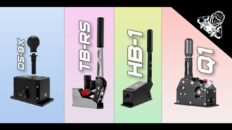
Sequential mode is good, but it’s not the best sequential experience I’ve had. The shift registers before you get the tactile feedback, which feels a bit disconnected if you shift slowly. It’s still really good, don’t get me wrong, and it loves to be used aggressively just like the H-pattern mode. But if I’m comparing it to dedicated sequential shifters like the Simagic Q1, SG Racing, Heusinkveld Magshift, or even the Magshift Mini, those feel more connected and immediate. The H2SQ’s sequential mode is perfectly functional and reliable, but it’s not quite at that elite level.
Here’s the thing though. This is the best combo unit I’ve reviewed. If you want both H-pattern and sequential in one package, this is it. The H-pattern experience alone is worth the price of admission, and having a high quality sequential mode is fantastic. If you’ve never used any of the other sequential shifters I’ve mentioned, you’ll think i’m crazy for not being ecstatic about this one. However, at this price point, it’s important to give accurate perspective without being blinded by one of the most amazing products I’ve ever reviewed.
8. Final Thought
This is an end game shifter. If you’re serious about H-pattern driving in sim racing, this is the hardware you aspire to own. The build quality is exceptional, the H-pattern feel is among the best I’ve ever experienced, and the fact that it also does sequential makes it incredibly versatile.
Let’s be realistic though. There will always be some compromise with any combo unit and it’s usually the sequential experience that suffers. Let me quantify it by saying that if SG Racing or Simagic’s Q1 give me a 9/10 experience, this shifter still gives me a solid 8 out of 10 experience. For perspecive, Fanatec’s shifter gives me a 5/10 shift and Simagic’s DS-8X gives similar. So BDH has still done well here all things considered.
At over €1,000 all in, this is an enormous investment. But you’re getting hand-built quality with a lifetime warranty, and a shifter that’s trusted by professionals. This isn’t going to be obsolete in a few years. This is built to last decades.
The reverse gear lockout is my only real complaint, and depending on your use case, it might not even bother you. For everything else, this shifter delivers on its promises. It feels authentic, it’s reliable, it’s adjustable, and it looks fantastic on the rig.
If you have the budget and you’re chasing that last bit of immersion, this is the shifter to get. It’s the best combo unit I’ve reviewed, and I have no hesitation recommending it. BDH has absolutely nailed it with the H2SQ.
I’m Laurence, I stream every Tuesday and Thursday at 9pm UK/Irish time. Thanks for watching, hit the thumbs up or comment with your experiences or opinions. I’ll chat to ye later.




Add comment